About
The Aims of this Website
This website aims to provide a global catalogue of historical tide records, both digitised and undigitised, as well as relevant digitisation tools. We hope that this resource will improve the discoverability of these records, support data rescue initiatives, and provide information that can help prioritise and plan future digitisation efforts.
If you are aware of any records or tools not listed on this site, please do not hesitate to contribute or get in touch. We are always eager to hear from you and aim to make this inventory as complete as possible.
The Importance of Historical Tide Records
Sea level rise is a major consequence of climate change, increasing the risk of flooding, coastal erosion, and loss of ecosystems. Developing effective adaptation strategies requires accurate projections of future sea level change, the reliability of which depends on the length and quality of available time series. Additionally, the recovery of historical tide records enables the identification of extreme water level events, which are essential for calibrating and validating flood forecasting models.
Tidal measurements have been collected for centuries and represent some of the longest continuous environmental observations. However, much of this information remains stored in historical paper records and has not yet been digitised, limiting its accessibility and use in scientific analysis. As a result, many existing sea level datasets extend back only to the late nineteenth century, despite the existence of much earlier observations.
Some of these records have already been recovered through data archaeology initiatives, significantly extending sea level time series. Examples include long-term tide gauge records from Amsterdam, Brest, Battery, and Sheerness. Nevertheless, many historical records remain undigitised and are at risk of deterioration or permanent loss.
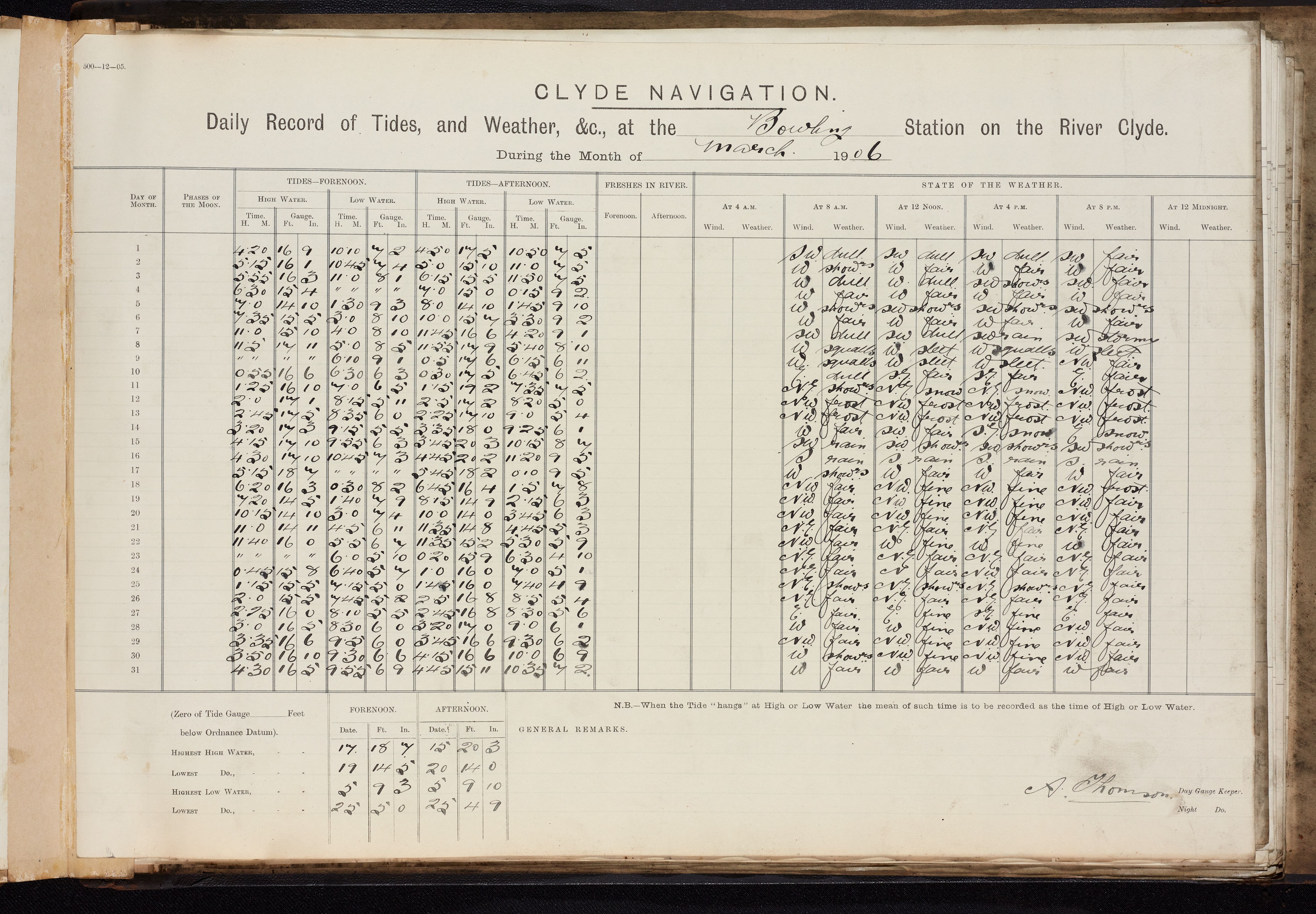
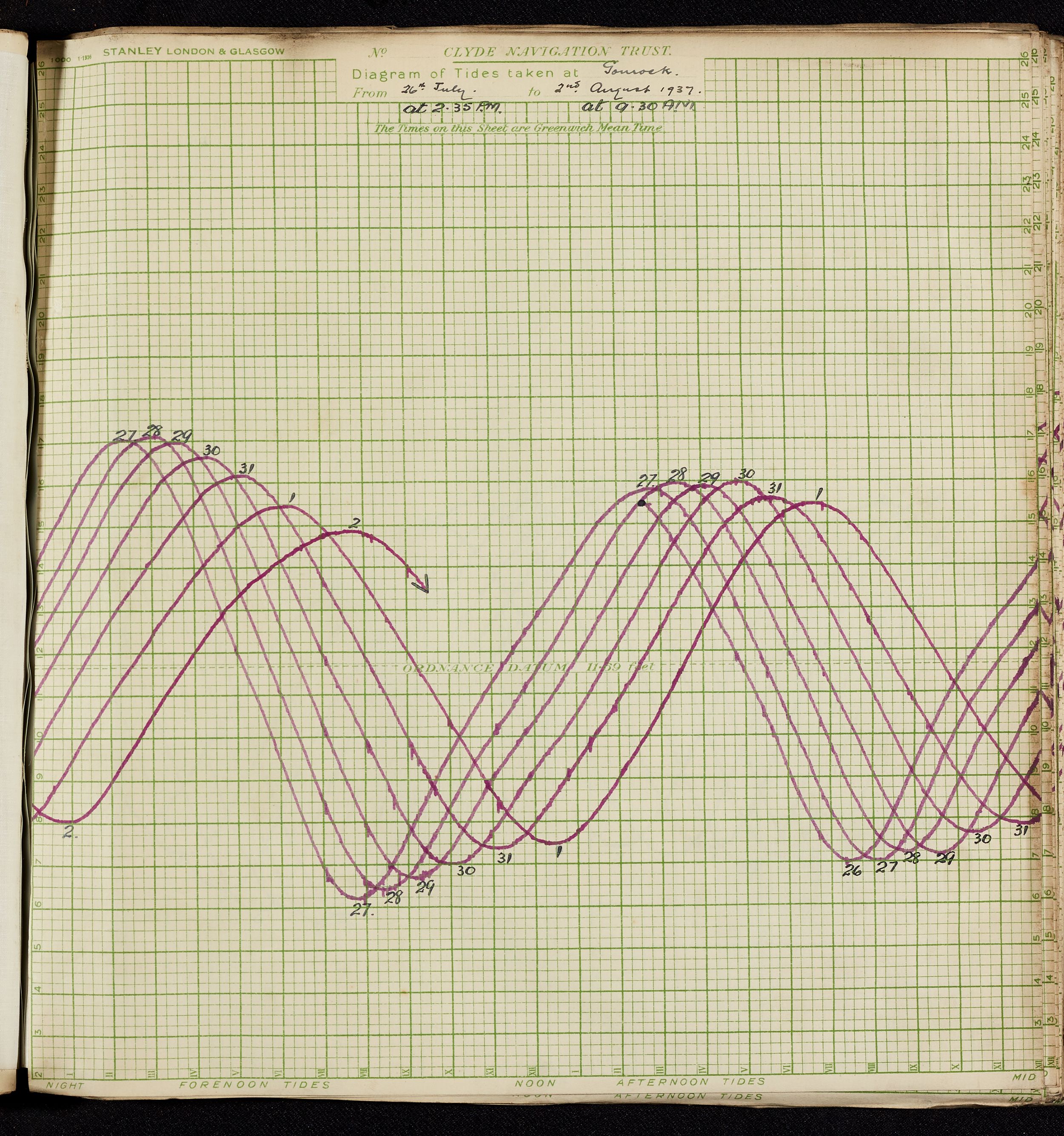
Historical tidal observations were typically recorded in two primary formats: ledgers and marigrams.
Location of Records
Disclaimer: Markers on the map show a rough indication of where the original record came from, not the exact location of the original record.
Data
High Frequency Digitised Historical Tide Records
A compilation of digitised high frequency historical tide records. The catalogue contains information on the location, duration, type of record, method of recovery, temporal resolution, and who recovered the data.
Download FileLow Frequency Digitised Historical Tide Records
A compilation of digitised low frequency historical tide records. These include records recovered at coarser temporal resolutions, such as annual maxima, annual means, monthly means, weekly maxima, and daily means.
Download FileUndigitised Historical Tide Records
A compilation of known undigitised historical tide records that remain in paper or analogue format. The catalogue contains information on location, duration, type of record, and who identified it.
Download FileInventory of Digitisation Tools
An inventory of digitisation tools that may be useful for digitising marigrams, including the name, price, and a download link for each tool.
Download FileContribute
We welcome contributions that help expand and improve this catalogue.
We welcome contributions that can help expand the catalogue of historical records and inventory of digitisation tools. Please contact us if you know of additional digitised datasets, undigitised archives, or useful digitisation tools that are not yet included on this site.
To contribute, please fill out the correct form and send it via email to ck1g20@soton.ac.uk.
Citation
If you use this site, please cite it as:
Kenwright, C. (2026). TideVault: A Global Catalogue of Historical Tide Records, available at: https://ckenw77.github.io/TideVault/
Additionally, please cite the paper that details the work behind this site:
Kenwright, C., Haigh, I.D., Williams, J., Chan, D., Nicholls, R.J., McFarland, S. and Becker, M., DATE. Tidal Time Capsules: A Global Catalogue of Historical Tide Records. Journal, VOL, PAGE.
If you use any of the data from these studies or the digitisation tools for your own investigations, please cite them accordingly.
Contact
Email: ck1g20@soton.ac.uk